

 In delivery
The Village Manly, Stage 3
Manly, Brisbane
Retirement apartments on the heritage Lota House site, built alongside an operating aged care community.
- Client
- The Village Retirement Group
- Builder
- FKG Group
Image: FKG Group
Home / Floor preparation
Every floor we lay starts with the slab. We grind, repair, level and, where the slab is too wet, install a moisture barrier before anything goes down, so the floor carries its warranty and stays down.
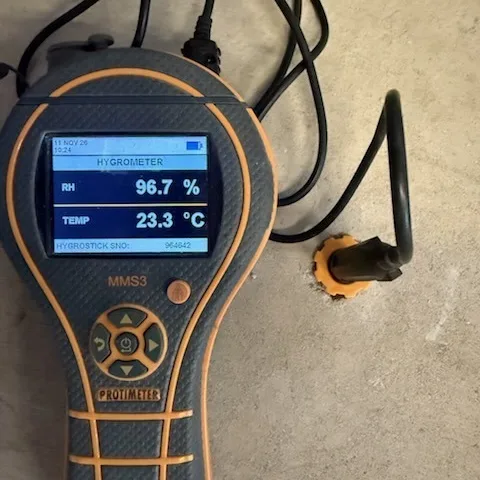
Book an AS 1884:2021 in-situ RH test of the slab, with a written report, before you choose a floor.
Most flooring failures don’t start with the flooring. They start with the slab: moisture still coming out of the concrete, an uneven surface, or a weak, contaminated top layer. Adhesives lose their bond, vinyl lifts or bubbles, and timber cups or gaps. Fixing it after handover means pulling up a finished floor.
We treat floor preparation as part of the flooring package, not an extra. It’s tested, priced and agreed up front, so it doesn’t turn into a surprise variation halfway through the program.
Preparation is done to each flooring manufacturer’s moisture and flatness requirements. If a floor won’t meet them, we tell you before it goes down.
Moisture becomes a known quantity before the program is locked in, not a problem discovered on install day.
Slabs moisture tested as soon as we have access, so results are in hand while there’s still time to act on them.
Results recorded and shared with the builder, with any area outside tolerance flagged.
Grinding, levelling or a moisture barrier priced and agreed before work starts.
The substrate prepared area by area to the builder’s program.
Flooring installed to the manufacturer’s requirements, then protected through to handover.
New concrete holds far more water than it needs to cure, and gives it up slowly. Slabs that are covered early, poured over membranes or podiums, rained on before the roof goes on, or closed up without airflow can stay wet for months. Older slabs on the ground, especially those cut into a slope, can stay wet for good.
Lay a resilient or timber floor over a slab that is still releasing moisture and the adhesive breaks down. Vinyl bubbles and lifts at the seams, timber cups and gaps, and the failure often shows up months after handover.
Where the slab is over the limit, the fix is a moisture barrier system under the levelling compound. On commercial projects we ask the builder for a written direction before we proceed: either an Ardex moisture barrier as a variation, or proceed without treatment with the builder accepting the substrate risk. For homeowners we don’t offer the proceed-without-treatment option: a slab over the limit is treated before the floor goes down.
Download Technical Bulletin BFTB-001 (PDF) All technical bulletins
From slab grinding in new apartment towers to moisture barriers in buildings next to operating communities.
In delivery
Manly, Brisbane
Retirement apartments on the heritage Lota House site, built alongside an operating aged care community.
Image: FKG Group
 Completed
Robina, Gold Coast
A multi-level fitout of TAFE Queensland’s newest campus, recognised as Australia’s first sustainable vocational education and training campus. Commercial training kitchens, hair and beauty studios, lecture rooms, a gym, classrooms, and a conference and bar level for events.
Image: Shape Australia
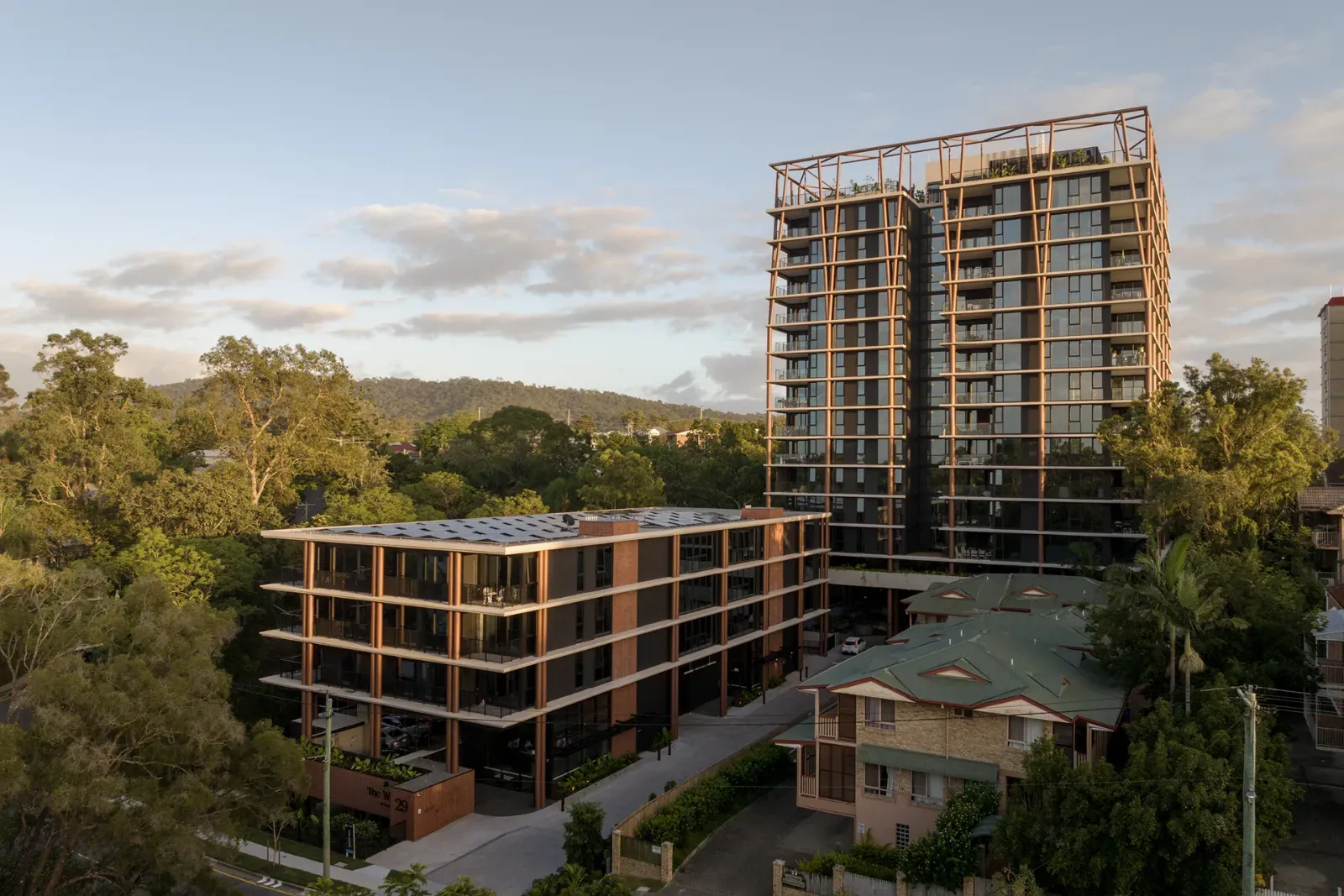 Completed 2024
Indooroopilly, Brisbane
Two boutique residential buildings with a rooftop pool and terrace overlooking the river and city.
Photo: Mosaic Property Group
It depends on the slab’s thickness and mix, how it was cured, and site conditions such as airflow and air-conditioning. Rules of thumb are only a rough guide, so the reliable answer is a moisture test. We test early so the program can be planned around the result.
If the program allows, the slab is given more time to dry and re-tested. If it doesn’t, we apply an Ardex moisture barrier under the levelling compound, so the whole substrate is one Ardex system with a single system warranty. It’s priced for approval before any work goes ahead.
Usually. Old adhesive, paint, sealers and uneven patches all need to come off so the new adhesive and levelling compound bond to sound concrete. We diamond grind with dust controlled to the silica regulations, then level to the new floor’s flatness tolerance.
Send the drawings, finishes schedule and program to our estimating team. We’ll come back with an itemised price and any clarifications.